EVENT: Two-day workshop on how to become an International Criminal Lawyer

The Association of Young International Criminal Lawyers with the Institute of International Legal Studies invites everyone to a two-day online workshop on “How to Become an International Criminal Lawyer” on March 12 & 13, 2026 from 9:00 AM- 12:00 PM (GMT)/ 5:00-8:00 Philippine Standard Time (PHT). The two day workshop provides an introduction to becoming an international criminal lawyer. Participants will explore the foundations of international criminal law, key institutions and the practical skills required to work in this field. Ms. Diana Constantinide will be the guest speaker during the workshop. She is a barrister at 33 Bedford Row Chambers…
Continue Reading EVENT: Two-day workshop on how to become an International Criminal Lawyer

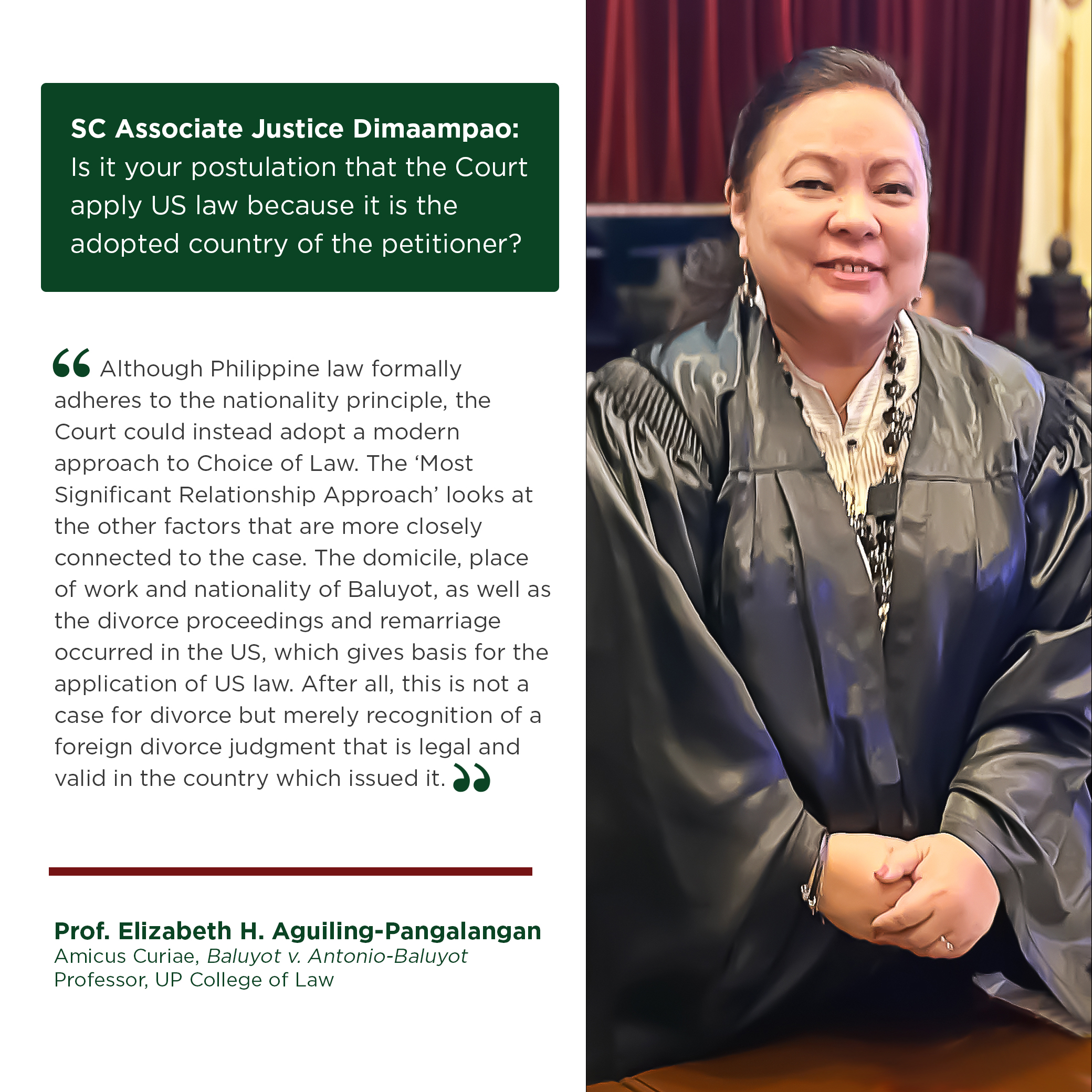
UP Law participates in Congressional hearing on proposed amendments to Family Code, Revised Penal Code

The Family Code of the Philippines has significantly abrogated inequality between the husband and wife. It reformed family law and emancipated the wife from the exclusive control of the husband and placed her at parity with him in the family.¹ However, trails of inequality and partiality to the husband in some of the provisions of the Code have remained. For decades, provisions that give the husband’s decision "legal primacy" in disagreements over community property or parental authority have treated women as subordinate partners in their own homes. These laws suggest that for a family to function, a woman’s voice must…

Continue Reading UP Law participates in Congressional hearing on proposed amendments to Family Code, Revised Penal Code

Second edition of “Treaties: Guidance on Practices and Procedures” launched

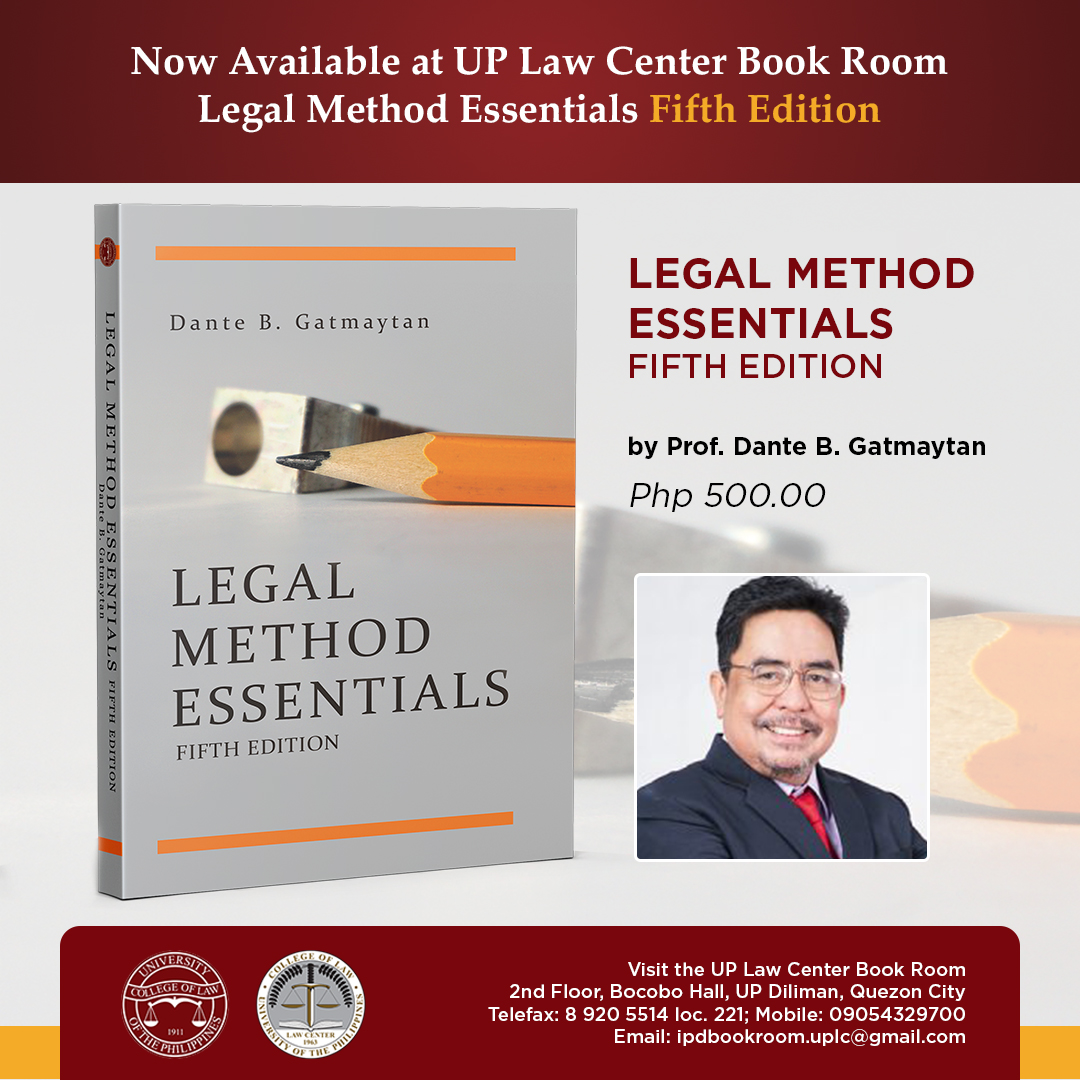
The Philippine Embassy in the Netherlands, in collaboration with the Department of Foreign Affairs’ Office of Treaties and Legal Affairs (OTLA), the Foreign Service Institute, the University of the Philippines Law Center, and the Asian Society of International Law, recently held the launch of the second edition of “Treaties: Guidance on Practices and Procedures,” co-authored by Ambassador J. Eduardo Malaya and Professor Rommel J. Casis. The event took place on 20 February 2026 at the Department of Foreign Affairs in Pasay City and was attended by diplomatic officials, legal practitioners, academics, and representatives from government agencies. The program opened with…

Continue Reading Second edition of “Treaties: Guidance on Practices and Procedures” launched

UP GLPP Participates in Senate Hearing on the Proposed Right to Care Bill

On 23 February 2026, the UP Gender Law and Policy Program (UP GLPP) participated as a resource institution in the Senate Committee Hearing on the proposed Right to Care Bill, presided over by Senator Risa Hontiveros. The hearing convened national government agencies, civil society organizations, legal practitioners, healthcare professionals, and sectoral representatives to deliberate on a legislative framework recognizing the designation of a healthcare agent. In her opening statement, Senator Hontiveros emphasized that care is most ethical when it is grounded in respect for a person’s wishes—ideally expressed in advance. She noted that local government units such as Pasig, Baguio,…

Continue Reading UP GLPP Participates in Senate Hearing on the Proposed Right to Care Bill

UP IAJ highlights the reforms that defined and reshaped the Philippine judiciary in the post-EDSA era

The EDSA People Power Revolution did not merely restore democracy--it restored the conditions necessary for meaningful judicial reform. Marking 40 years since, the UP Institute for the Administration of Justice draws from the archives of the Judges' Journal (a former UP Law Center publication) to spotlight the select reforms that defined and reshaped the Philippine judiciary in the post-EDSA era. #EDSAat40 #EDSAPeoplePower #NeverAgain #TatakUPLaw #UPIAJ

Continue Reading UP IAJ highlights the reforms that defined and reshaped the Philippine judiciary in the post-EDSA era

[VIDEO] EDSA at 40: The Law. The People. The Promise.

  Forty years ago, history stood still on a highway. On a stretch of asphalt known as Epifanio de los Santos Avenue, the Filipino people chose courage over fear, truth over tyranny, and hope over silence. This was the EDSA People Power Revolution. In February 1986, millions gathered—not with weapons, but with prayers, with conviction, and with an unyielding belief in the rule of law. They came from classrooms and courtrooms, from factories and parishes. Among them were students, faculty, and alumni of the University of the Philippines—men and women who believed that the law must serve the people, not…

Continue Reading [VIDEO] EDSA at 40: The Law. The People. The Promise.

End of content

No more pages to load