
Notes for Law 121 – Block 1 Eve 2
By Prof. Gwen Grecia-De Vera
5 October 2026
Before taking up the three great departments of government, I introduce my Constitutional Law I students to judicial review through two landmark decisions. We begin with the seminal United States case Marbury v. Madison (5 U.S. 137), followed by Angara v. Electoral Commission (63 Phil. 139), the Philippine Supreme Court decision that is generally regarded as having firmly established the power of judicial review in the country.
This helps first-year law students understand why we derive our understanding of the Constitution from judicial decisions and the role of the Judicial Department, especially the Supreme Court, in shaping constitutional meaning in the exercise of their adjudicative function. It is important to note that Angara was not the first time Philippine courts determined whether governmental acts were in conformity with constitutional principles.
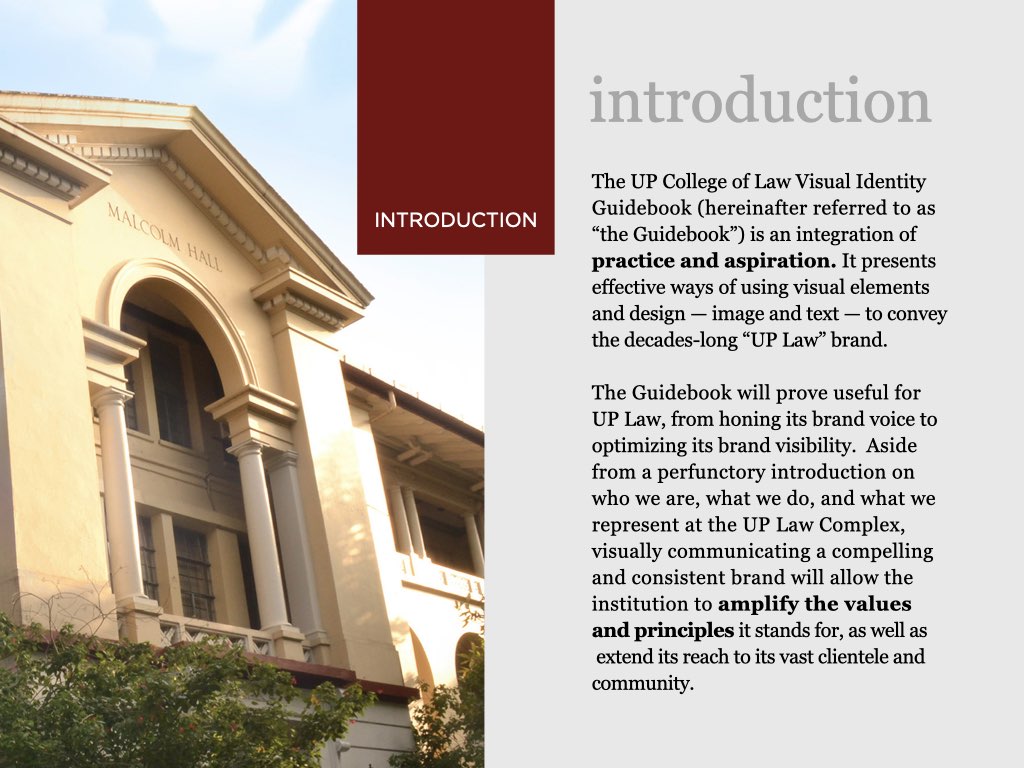
In Concepcion v. Paredes (42 Phil. 499), penned for the Supreme Court by our first dean Justice George A. Malcolm, the Court invalidated laws that encroached upon the prerogatives of the judicial department, in violation of separation of powers. Justice Malcolm described the controversy as involving “a number of constitutional objections of paramount importance to the validity of the entire law and to parts of it have been advanced and have been supported by ingenious and eloquent pleas.” In United States v. Ang Tang Ho (43 Phil. 1) decided in 1922, Act No. 2868 was struck down as an impermissible delegation of legislative power, thereby reversing the conviction of the accused under that law. Even earlier, in United States v. Ten Yu (24 Phil. 1), the Supreme Court determined whether municipal ordinances exceeded the scope of permissible legislative delegation under the Philippine organic acts. While not the vehicle for the inception of judicial review, Angara v. Electoral Commission exemplified its use by the Court as a moderating power. The Court said –
“…[T]he nature of the present controversy shows the necessity of a final constitutional arbiter to determine the conflict of authority between two agencies created by the Constitution. Were we to decline to take cognizance of the controversy, who will determine the conflict? And if the conflict were left undecided and undetermined, would not a void be thus created in our constitutional system which may be in the long run prove destructive of the entire framework? To ask these questions is to answer them….Upon principle, reason and authority, we are clearly of the opinion that upon the admitted facts of the present case, this court has jurisdiction over the Electoral Commission and the subject matter of the present controversy for the purpose of determining the character, scope and extent of the constitutional grant to the Electoral Commission as ‘the sole judge of all contests relating to the election, returns and qualifications of the members of the National Assembly.’”
After the September 1935 elections, Jose A. Angara was elected, proclaimed, and sworn in as a member of the National Assembly for Tayabas. On December 3, 1935, the National Assembly confirmed the election of members against whom no protest had yet been filed. Five days later, Pedro Ynsua, who ran for the same seat, filed an election protest before the Electoral Commission, newly created under the 1935 Constitution. After the Commission deemed the protest timely and asserted jurisdiction, Angara asked the Supreme Court to prohibit it from proceeding. From that procedural contest came Angara v. Electoral Commission, one of the clearest early statements of judicial review under the 1935 Constitution.
In the exercise of judicial review as a moderating power, the Supreme Court ruled in favor of Ynsua, concluding that the grant of power to the Electoral Commission to judge all contests relating to the election, returns and qualifications of members of the National Assembly, was intended to be as complete and unimpaired as if it had remained originally in the Legislature. The Court added that the “express lodging of that power in the Electoral Commission is an implied denial of the exercise of that power by the National Assembly…. If the power claimed for the National Assembly to regulate the proceedings of the Electoral Commission and cut off the power of the Electoral Commission to lay down a period within which protest should be filed were conceded, the grant of power to the commission would be ineffective.”
Constitutional questions, knotty for some and plainly vexatious for others, are likely to arise as the impeachment trial continues. Here are three lessons from Angara that will help even a first-year law student make sense of these anticipated controversies and understand the role of each Department within our constitutional order.
- Judicial review draws both its meaning and its discipline from the separation of powers, and from interpretive coordinacy that separation presupposes.
In Angara, the Supreme Court described the controversy before it as “involving as it does a conflict of a grave constitutional nature between the National Assembly on the one hand, and the Electoral Commission on the other,” the latter being “a constitutional organ, created for a specific purpose, namely to determine all contests relating to the election, returns and qualifications of the members of the National Assembly.” In concluding it had the constitutional authority to decide the case, the Court defined the contours of judicial review, carefully situating its force and discipline within the context of the separation of powers. The Court explained –
“Although the Electoral Commission may not be interfered with, when and while acting within the limits of its authority, it does not follow that it is beyond the reach of the constitutional mechanism adopted by the people and that it is not subject to constitutional restrictions. The Electoral Commission is not a separate department of the government, and even if it were, conflicting claims of authority under the fundamental law between department powers and agencies of the government are necessarily determined by the judiciary in justifiable and appropriate cases.”
This suggests a later case, Neri v. Senate (G.R. No. 180643, 25 March 2008), where the Supreme Court, citing United States v. American Tel. & Tel Co. (567 F 2d 121), said that “the coordinate branches do not exist in an exclusively adversary relationship to one another when a conflict in authority arises. Rather, each branch should take cognizance of an implicit constitutional mandate to seek optimal accommodation through a realistic evaluation of the needs of the conflicting branches in the particular fact situation.” (In United States v. American Tel. & Tel Co., the US Supreme Court said “[t]his aspect of our constitutional scheme avoids the mischief of polarization of disputes. Professor Freund has cautioned that ‘(i)n the eighteenth-century Newtonian universe that is the Constitution, an excessive force in one direction is apt to produce a corresponding counterforce.’”)
Had the National Assembly and the Electoral Commission not each asserted its own understanding of the scope of their respective constitutional authority, the issues in Angara would not have been so sharply defined, nor would the occasion for a clear exercise of judicial review have arisen.
Angara’s early but enduring perspective on judicial review should continue to inform the adjudicative function and the judiciary’s duty to interpret the law. A later case on the powers of the House of Representatives Electoral Tribunal (“HRET”), Co v. HRET (G.R. No. 92191, 30 July 1991) underscores that judicial review can function meaningfully only when the political departments clearly define and assert the constitutional limits of their own authority. It is through each branch’s faithful adherence to its assigned sphere that the Constitution’s allocation of powers acquires practical meaning.
In Co v. HRET, the Supreme Court reaffirmed the doctrine in Angara, holding that the Electoral Tribunal’s jurisdiction is sole, exclusive, and complete. The use of the word “sole” highlights the exclusivity of this jurisdiction, making the Tribunal the final arbiter of contests relating to the election, returns, and qualifications of members of Congress. As explained in Robles v. HRET (G.R. No. 86647 5 February 1990), courts may intervene only when the Tribunal acts with grave abuse of discretion amounting to lack or excess of jurisdiction. Indeed, even under the expanded judicial power granted by the 1987 Constitution, the Court does not correct mere errors of judgment or substitute its own view for that of a constitutionally independent body. Co v. HRET therefore shows that separation of powers is preserved not by judicial supremacy alone, but by each constitutional body exercising its own authority within clearly defined limits, with judicial review serving only to ensure that those limits are not transgressed.
- Judicial review, therefore, is not judicial supremacy in the political sense.
When courts identify constitutional and legal boundaries, the Supreme Court explained that they do not “assert any superiority over the other departments.” This means that judicial review is not a license for the Judicial Department to dominate the political departments.
“When the judiciary mediates to allocate constitutional boundaries, it does not assert any superiority over the other departments; it does not in reality nullify or invalidate an act of the legislature, but only asserts the solemn and sacred obligation assigned to it by the Constitution to determine conflicting claims of authority under the Constitution and to establish for the parties in an actual controversy the rights which that instrument secures and guarantees to them. This is in truth all that is involved in what is termed ‘judicial supremacy’ which properly is the power of judicial review under the Constitution.”
This framing, developed nearly a century ago, presents judicial review as an exercise in balancing authority and restraint.Angara’s language is clear, referring to “the instrumentality of the judiciary as the rational way,” reposing in the judiciary the authority to determine the constitutional validity of a governmental act. The power of judicial review, however, finds utility only in “actual cases and controversies,” after the parties have been heard, and where the constitutional question raised is preclusive (the very lis mota presented). Judicial review, therefore, is a decision-making function inextricably tied to a genuine legal contest.
- Understanding the 1987 Constitution as lacking perfection and perfectibility.
Several weeks ago, I ended our class session with an appeal for the class to read the 1987 Constitution with civic vigilance. Quoting James Madison, the Supreme Court in Angara imparted an abiding reminder that the people, as “authors of this blessing,” must also be “its guardians.” Judicial review may be a moderating power, but constitutional government is not maintained in courtrooms alone. The Court warned that “all the possible abuses of the government are not intended to be corrected by the judiciary.” Some remedies are political, not judicial, and must be pursued “through the ordinary processes of democracy.”
For first-year Constitutional Law students, this may be Angara’s most important lesson. The case teaches that judicial review protects constitutional boundaries while also requiring restraint—what the Supreme Court would later describe as inter-departmental comity: (a) courts decide actual controversies, (b) the political departments exercise their lawful powers faithfully, and (c) citizens remain responsible for safeguarding the constitutional order they created. As the Supreme Court memorably concluded, the success of government would be tested not only in “consultation rooms and court chambers,” but also in “Filipino minds and hearts.”



































































 on the upper right corner to select a video.