
UP College of Law Alumni Homecoming
Golden Jubilee Class of 1976 • Silver Jubilee Class of 2001
Keynote Lecture by Prof. Theodore O. Te
Tonight, I want to speak about your theme, Pamana at Panata—Legacy and Promise—through a love letter to the place that has brought all of us together.
I
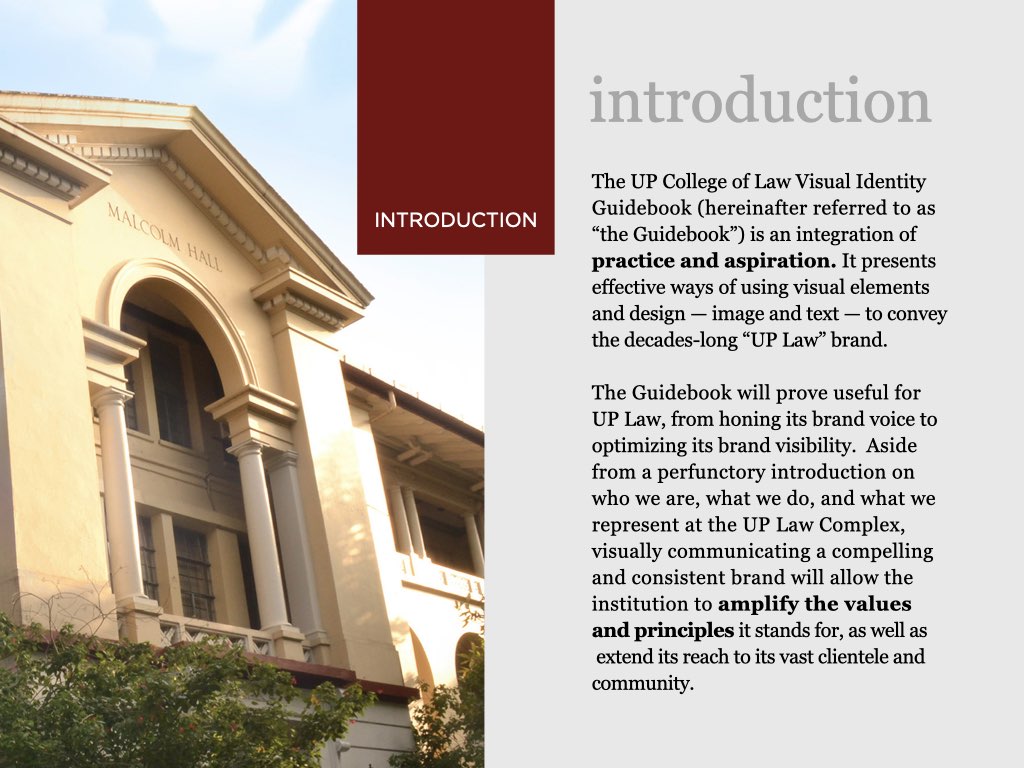
Dear Malcolm Hall:
We have come back home.
We left your portals many years ago but some have kept returning so regularly that you might reasonably ask whether we ever actually left.
We have come back older, hopefully wiser, and with a greater appreciation for comfortable chairs and cushioned shoes.
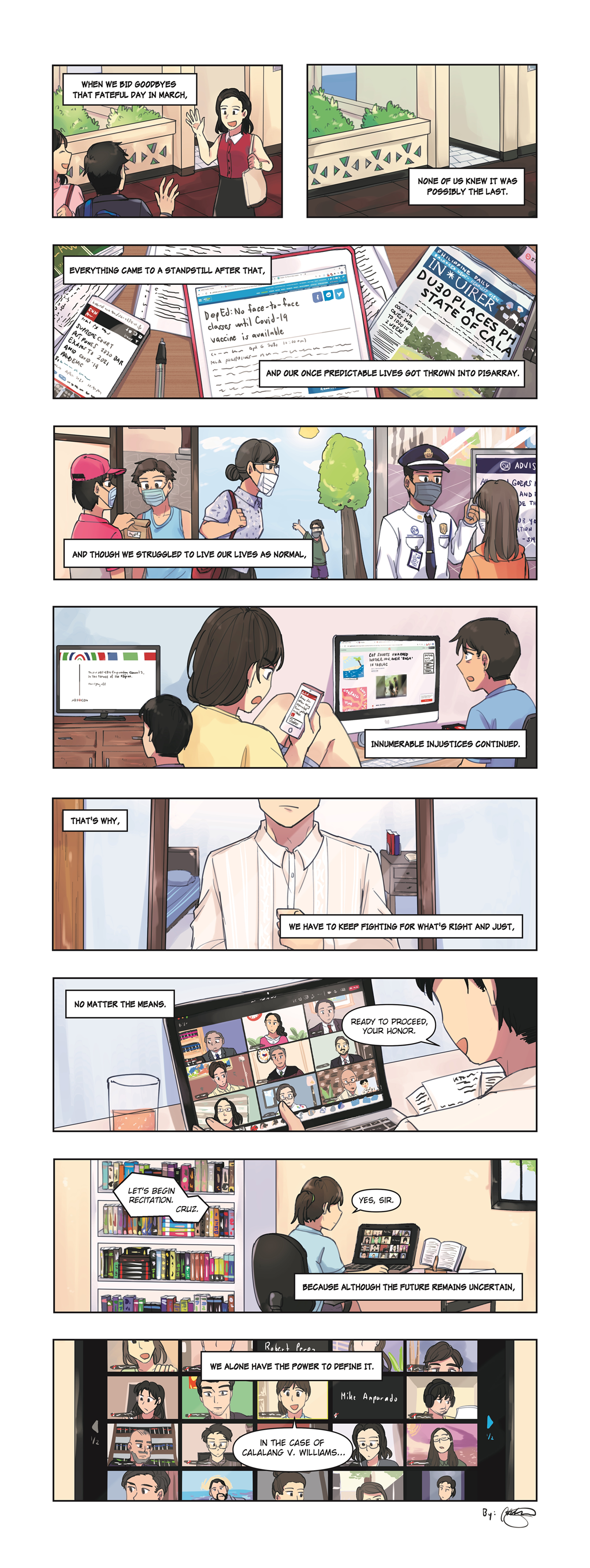
You knew us before the titles, the positions, the offices, and the responsibilities, you knew us as students trying to find the right classroom and, on many days, the right answer.
You knew those who arrived in the room early and those who had perfected the art of entering the room quietly.
You knew those who raised their hands confidently and those whose principal classroom strategy was to avoid eye contact.
You knew those who had mastered “radyo,” and those who, even with the answers practically being shouted at them, could hear nothing but the loud beating of their own hearts.
You knew our ambitions. You also knew how quickly those ambitions could be reduced to one modest prayer: please, let me not be called today.
And yet, here we are. All together again.
We remember you with affection although affection may not have been the dominant emotion during examinations and countless recitations.
That is one of the privileges of a homecoming. Time allows us to remember the difficult parts with laughter, or with a measure of intentional amnesia. It also allows us to understand what those years gave us.
II
Our jubilarians lived through martial law and two EDSA revolutions. Our golden jubilarians left your portals four years after martial law and our silver jubilarians entered the legal profession at the beginning of a new century and on the winds of yet another regime change.
They saw how legal principles withstand pressure, and how institutions depend on people willing to uphold them. They saw the country change—sometimes in ways that was encouraging and sometimes in ways that tested their hopes.
The Class of 2001 holds a special distinction: more of you have come back to teach in this College, whether as full time faculty or as lecturers, than any other class. Many of your former teachers here tonight would gladly claim some credit for that—perhaps they were inspirations and models—but then, there may be another explanation: many of you came back determined to show us how it should be done.
Either way, your return has benefited generation after generation of students.
That is one of the things we have learned about Malcolm Hall: people leave carrying something that eventually brings them back. For some, it is friendship, for others it is gratitude; or maybe it is a sense that there is work here they want to begin, or help continue.
But above everything else, what we all carry from Malcolm Hall is found in three words that have become part of our DNA: honor, excellence, service—dangal, husay, paglilingkod.
Honor and excellence are what we received here, and what we have spent our lives growing. Service is what that legacy now asks of us.
The first is our pamana. The second is our panata.
III
At homecoming, we remember the classrooms, the corridors, the library, the books and the notes with nostalgia. But what we carry is larger than a collection of places and objects.
We carry the habits and the values we formed here.
To read carefully.
To think critically.
To interrogate.
To distinguish.
To write.
To express.
To care.
To lead.
We learned, during countless recitations, that confidence is useful, but preparation is much better.
We learned, sometimes painfully, that we could work harder and think more clearly than we had ever imagined.
We learned, as Dean Magallona would frequently remind us, that the law must be articulated in words, not through telepathy.
We learned that a one or a five does not define us—although a one certainly feels a great deal better than a five.
And we learned from one another–the classmate who explained a difficult case; the one who shared notes; that other one who made everyone laugh—wittingly or otherwise–when anxiety and awkward silence had settled over the entire room; the other who brought board games to while away the time as we waited for tardy professors; the one who was always ready to volunteer so that another who was less prepared would not be called; the one who showed that learning law at Malcolm could be both a character building and a values forming exercise.
We may have competed for grades and honors but we also helped one another get through.
As The Dawn would put it, “iisang bangka tayo.”
Some lessons came from books. Many more came from the people beside us who have become life-long friends.
Malcolm Hall, you gave those friendships a place to begin.
Tonight, we are grateful for the ones that have endured. We are grateful, too, for those whose presence we miss—whose names still belong in every telling of our years here.
IV
But this letter would be incomplete if we spoke only of what we remember. We must also speak of what we have come to understand in the years since we left Malcolm Hall.
That the law is nothing without justice.
That the law may be clear but justice has many faces and many voices.
That justice is not achieved by doing law but only by doing justice.
That doing justice begins with integrity—choosing to do the right thing regardless of the consequences, standing on principle even when you stand alone, and turning away from the popular path of least resistance for the quieter road less traveled.
And that justice, in the end, is larger than the law, and larger than lawyering.
We were trained to look for justice in statutes and decisions, in pleadings and arguments. But the longer we live, the more we realize that most of the justice in this world is done far from any courtroom, by people who have never read a case.
It is done by the employer who pays a fair wage without waiting to be sued. By the official who refuses a bribe no one would ever have discovered. By the teacher who keeps faith with the student everyone else has given up on. By the neighbor who speaks up, the stranger who stops to help, the parent who teaches a child that every person deserves respect.
Justice, at its root, is a way of living with others: giving each person what is due to them—not because a rule requires it, but because they are a person.
This is why being a good lawyer can never be separated from being a good person. The law gives us tools; character decides how we use them. A brilliant argument in the service of a cruel end is not justice. A technically correct result that crushes the powerless is not justice. And no amount of skill can make up for the absence of honesty, decency, and compassion.
Perhaps this is the deepest lesson the years have taught us: we were never meant only to practice justice. We were meant to become just.
V
The Class of 2001 has given this College a reminder of that lesson. Your gift, the painting Buyon, now occupies a prominent place at the Law Center.
It is not the kind of painting we usually hang in a law school, but it is the kind of painting that should.
There are no justices in robes, no columns, no scales. Its title is the word used inside our jails for the toilet—which, in a congested cell, is often the only place where water can be found. And so, the buyon becomes everything at once: a place to relieve oneself, to be cleaned but also to gather, to meet; in more ways than one, it is a room of comfort, a sanctuary, a safe space in a place where safety is not assured.
That is the place the painting shows us. Men bathing beneath a high, barred window, among pails and basins, with laundry strung overhead and dishes washed beside them. The old and the young. Bodies marked with tattoos that tell stories we will never fully know. Persons deprived of liberty, going about the most ordinary and most private act of caring for themselves, with no privacy at all, in the one place where the water is.
It is an uncomfortable painting. It is meant to be.
For these are the people the law most often affects but least often sees. In our pleadings and our decisions, they become respondents, accused, detainees, case numbers. Buyon refuses to let them be reduced to that. It shows us their age, their frailty, their weariness, their patience—their humanity. Nothing in the painting asks whether they are guilty or innocent. It simply insists that they are persons, and that their dignity survives even where their liberty does not.
Students will walk past it on their way to learn rules, doctrines, and procedures. And each time, it will ask them a question: for whom is all of this?
The answer is the human person. The law, at its core, exists to protect human dignity—the worth that no title confers and that no misfortune, no accusation, and no cell can take away. Before there is a case, there is a person.
Buyon asks us to see that person first. That is where justice begins: not in the brief or the decision, but in the choice to see another human being as fully human—especially the one the world has stopped looking at.
Thank you, Class of 2001, for placing that reminder where every future lawyer of this College will see it.
VI
This, then, is what it means to be a UP lawyer. It means being a good person first and by being a good person then a great lawyer—one who understands the context of a problem and sees its real causes, so as to imagine solutions even when those solutions do not rely on the law or the courts. It means seeing people, not only problems.
What it means to be a UP lawyer is to be the keeper of a high standard which is also a sacred trust.
Malcolm Hall, you prepared us to receive that trust.
And the years since graduation have taught us how carefully it must be held.
Our golden and silver jubilarians bring different lengths of experience to that lesson. But both can tell our students that a legal career—and a life—is built through choices repeated over time.
How honestly we advise.
How carefully we prepare.
How we treat people who have little power.
What we are willing to do when doing the right thing becomes inconvenient or unpopular.
Our profession gives us repeated opportunities to decide what kind of lawyer—and what kind of person—we will become.
That is why the words at the lobby describe a task that is never finished: “to teach law in the grand manner and to make great lawyers.”
We have all walked past those words.
Some mornings, perhaps, rather quickly. But they have a way of catching up with us.
Holmes tell us what he meant by those words: that the aim of a law school is “not to make men smart, but to make them wise in their calling,—to start them on a road which will lead them to the abode of the masters. A law school should be at once the workshop and the nursery of specialists…. It should obtain for teachers men [and women] in each generation who are producing the best work of that generation.”
VII
What then does the grand manner require of us?
Certainly, it requires intellectual rigor. Our students deserve an education that makes demands on them and gives them the means to meet those demands.
It also requires context: an understanding of history, institutions, human behavior, and the country in which legal rules operate.
It also requires conscience: a fundamental appreciation of the difference between what is legal and what is just, what is prescribed and what is right, what is popular and what is proper.
And what makes a great lawyer?
The years have surely given our jubilarians, and all of us, many answers.
There is greatness in important cases and public achievements.
There is also greatness in work whose value is known mainly to the person helped–wages recovered. A home protected. Liberty restored. A dispute resolved before it destroys a family.
There is greatness in mentoring a younger lawyer with patience, or in helping a student regain the confidence to continue.
These are greatnesses within the reach of every one of us.
But there is another form of greatness—
A greatness that goes beyond the annual statistics of the bar examinations.
A greatness that goes beyond the prizes won in moots and other competitions.
A greatness that goes beyond rankings, ratings, and recognition.
A greatness that is not often seen, heard, understood, or appreciated, but is felt by those who will never enter your classrooms and yet have the biggest stake in what happens within your walls—a stake in the lawyers we educate, the questions we research, and the public concerns to which we lend our knowledge and our voice.
Perhaps it is expressed in a dissenting voice raised against popular thought.
Perhaps in the interrogation of an established norm.
Or in the willingness to comfort the afflicted and to afflict the comfortable.
This, too, is part of the legacy we celebrate tonight.
And it is a legacy that has grown over the years—in cases argued and causes defended, in students taught and clients served, in integrity kept when it would have been easier to let it go.
The dangal and husay we first met as words of a motto have become lives actually lived.
That is our pamana, and tonight we honor how much it has grown.
But a legacy that grows is also a legacy that asks for more.
VIII
And so, dear Malcolm Hall, here is our panata.
Our panata is the third of those three words: paglilingkod.
It is not contentment with what we have already done. It is the desire—restless and unfinished—to do more in service: to place everything we have received and grown at the service of others, especially those who have the least but have the most at stake.
It begins with a promise to help you remain relevant.
That means paying attention to the world our students will enter.
Technology is changing how people work, communicate, produce evidence, and seek advice. Our graduates will need sound judgment in using tools that will continue to evolve.
At the same time, familiar injustices remain: people unable to afford counsel, proceedings that take too long, jails filled far beyond what human dignity allows, and rights that remain difficult to enforce.
We must prepare students to respond to these realities with competence, imagination, and integrity–and with a regard for human dignity that no tool can supply.
We, the alumni, can help.
We can teach. We can mentor. We can support students. We can bring the questions of practice into the classroom, and take the insights of the classroom back into our work.
We can listen to a new generation without assuming that everything unfamiliar is a decline in standards—though I recognize that this may require considerable self-restraint.
We can also help preserve what deserves to endure: rigorous thought, honest inquiry, courage, generosity, and a serious commitment to the public good.
Our golden jubilarians remind us of the depth of experience available to this College.
Our silver jubilarians remind us how a legacy becomes a living contribution.
Together, you show us that coming home can be an act of renewal.
We return to remember what we have received and to consider what we can still give.
IX
Dear Malcolm Hall:
Thank you for the questions that unsettled us.
Thank you for the teachers who challenged us, the friends who sustained us, and the opportunities that changed our lives.
Thank you for giving us reasons to be proud, and standards by which to examine that pride.
We have carried you into courtrooms, boardrooms, offices, classrooms, communities, and homes.
We hope that, through our work, something of your promise has reached people who needed it.
And tonight, we give you ours.
We will keep learning.
We will make time to guide those who come after us.
We will use what we know with care, and whatever influence we have with responsibility.
We will see the person before the problem, and treat every person with the dignity that is theirs.
We will help this College teach law in the grand manner.
And we will continue the lifelong work of becoming great lawyers—and good people.
To the Class of 1976 and the Class of 2001: congratulations on your homecoming, and thank you for the great witness.
Fifty years and twenty-five years have carried you great distances from your student days. Tonight reminds us that we can travel far and still remain answerable to what we learned here.
X
To end, I want to use a few more words from a song that is familiar to all of us.
We sing these words at programs and celebrations, at championships and bonfires—wherever a UP community gathers—with affection for the University that binds us as one despite our many differences.
Tonight, let us also hear them as a commitment to carry its work beyond its walls.
“Humayo’t itanghal, giting at tapang.”
Let that be our panata: to carry forward the honor and excellence we have inherited and grown; to meet the work ahead with courage; to keep finding ways to serve more, and to serve better; and to help the next generation do the same.
And let our lives give substance to its final aspiration:
“Mabuhay ang pag-asa ng bayan.”





























































 on the upper right corner to select a video.