
Professor Casis Joins Geneva Global Gathering of IHL Professors

Professor Casis Joins Geneva Global Gathering of IHL Professors
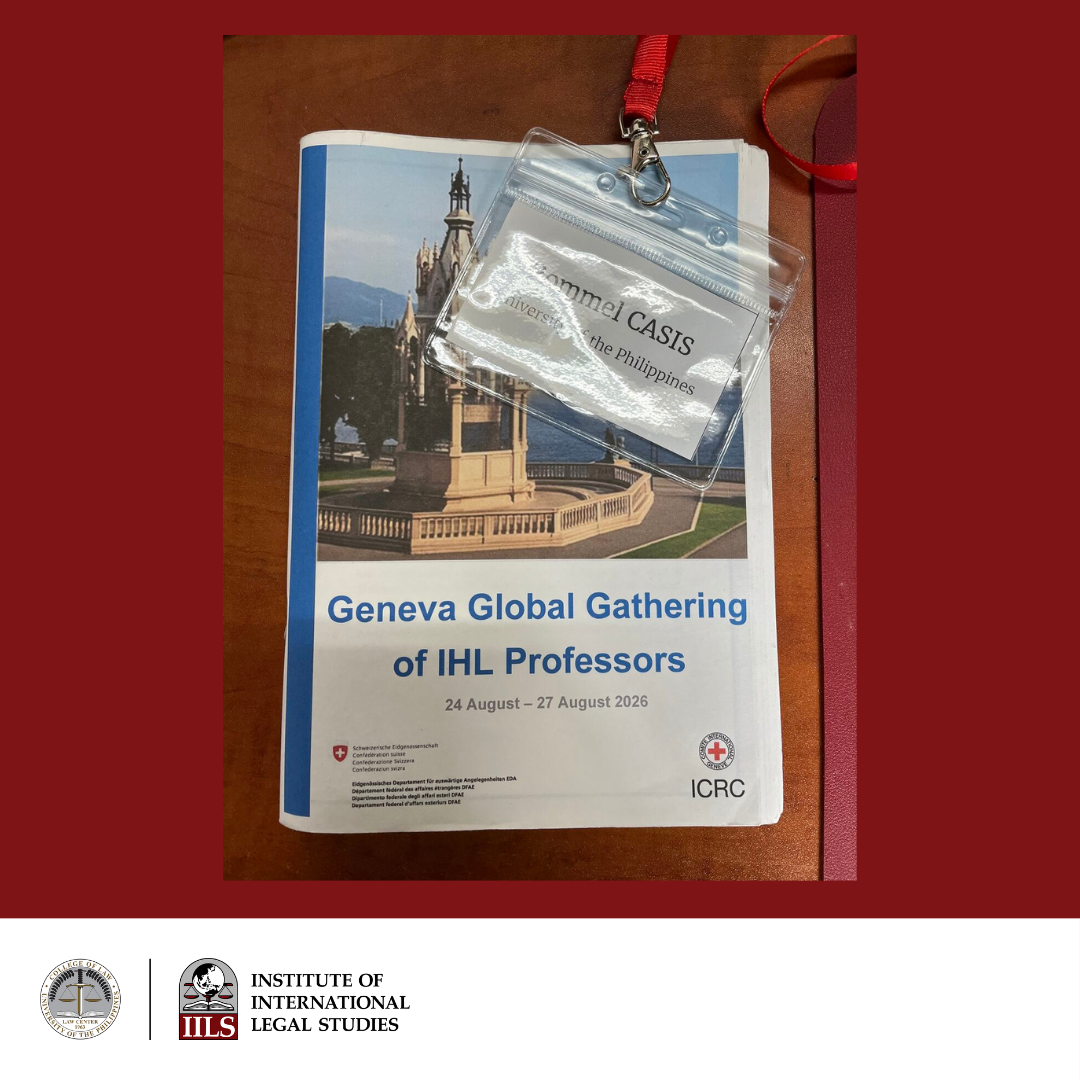
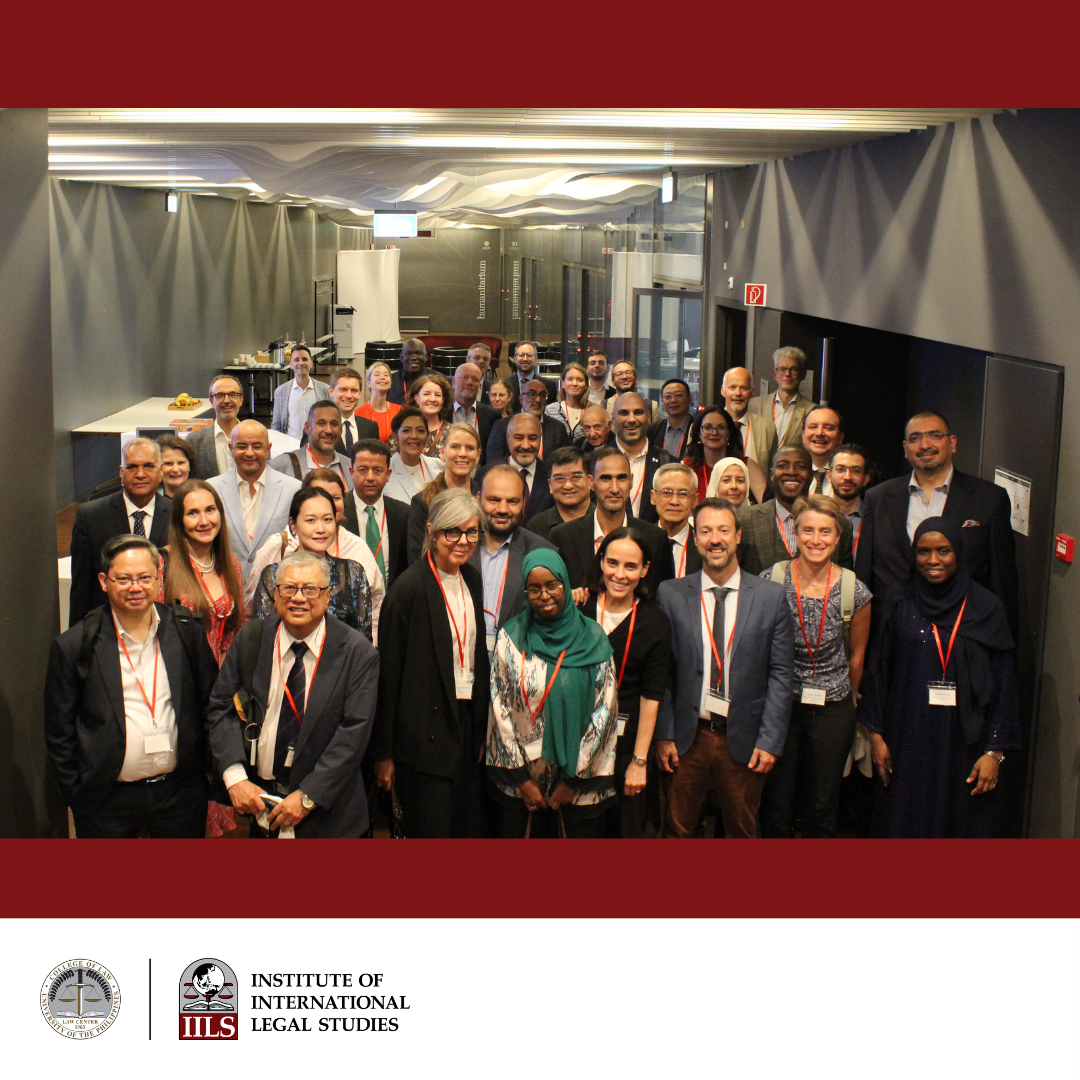
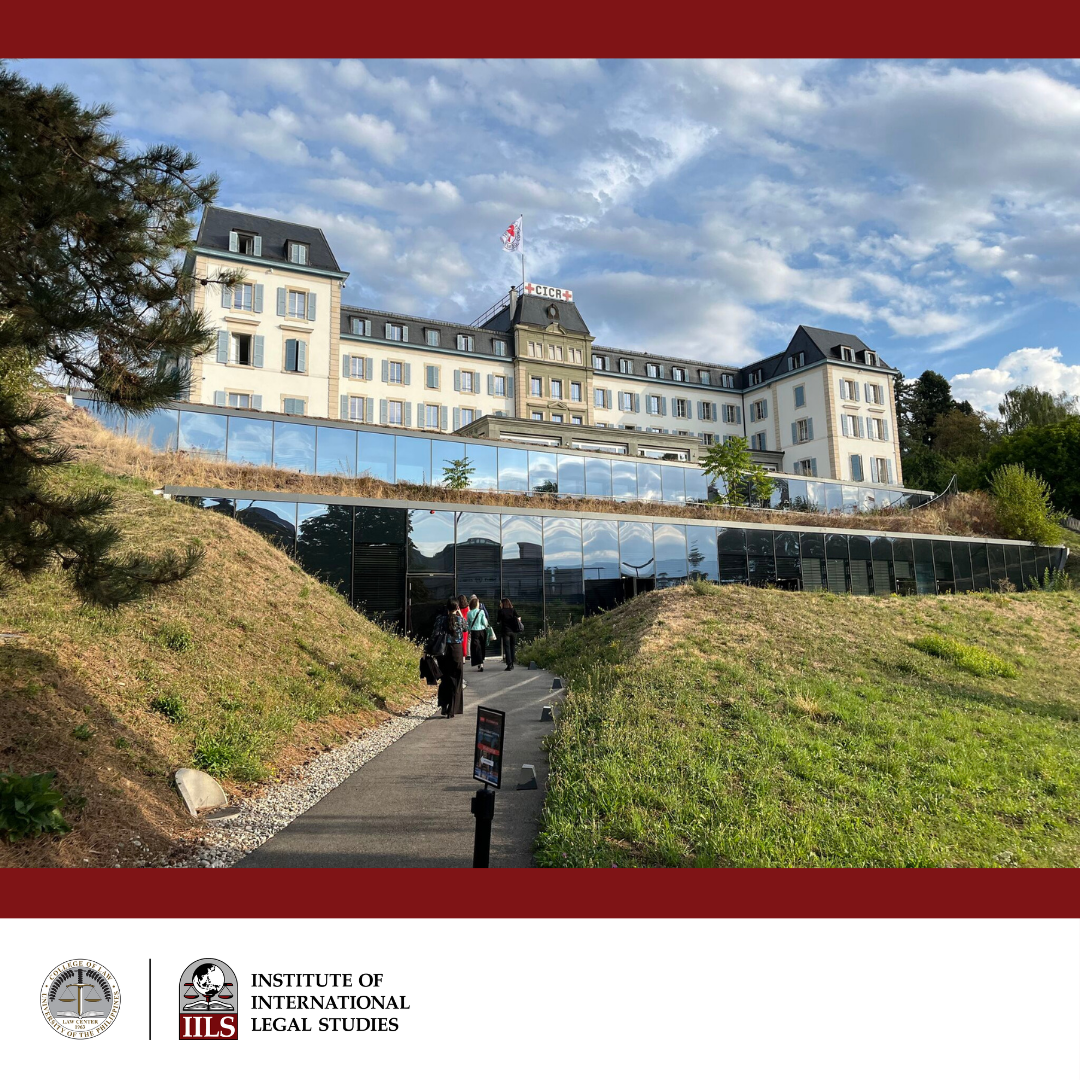
The Institute of International Legal Studies (IILS) Director and UP College of Law (UP Law) Professor Rommel J. Casis was invited to participate in the Geneva Global Gathering of International Humanitarian Law (IHL) Professors. The Gathering was held at the International Committee of the Red Cross (ICRC) Headquarters in Geneva, Switzerland, last August 24-27, 2026.
The ICRC hosted the four-day Gathering in partnership with the Directorate of International Law (DIL) of the Swiss Federal Department of Foreign Affairs (FDFA). The event featured key dignitaries and scholars, joined by top professors from all across the globe.
The event mainly aimed to consult a diverse group of academics on current and emerging IHL challenges, advocate faithful interpretation and implementation of IHL, explore innovations to teaching and researching IHL, support the global IHL academic network, and engage with Geneva-based academia and Permanent Missions, civil society, media, and the general public.
The Gathering was a timely approach to critical issues in legal and humanitarian affairs, especially in the age of new technologies and other emergent challenges. The event served as a forum to address the role of IHL in armed conflicts, foster institutional collaboration and support, and raise public awareness of the importance of upholding IHL. The agenda proved crucial in a fragmented world.
During the course of the event, Professor Casis participated in consultations on vital humanitarian and legal topics, as well as several thematic workshops. He engaged with other academics in expert roundtables and high-level dialogues on various topics, including: the preservation of the integrity of IHL, recent developments on the framework for classifying armed conflicts, IHL vis-à-vis the use of autonomous weapons systems and artificial intelligence, IHL dissemination and implementation, tools for environmental protection in armed conflicts, and updates on Commentaries of the Geneva Conventions, their Additional Protocols, and public databases, Library and Archives. He also engaged with Permanent Missions to the United Nations, the Geneva Office, and other Geneva-based international organizations. Additionally, he attended a public event—the precursor to the yearly “Geneva IHL Week”—alongside other interactive activities and networking opportunities.
Professor Casis’ engagement in the Gathering signified the UP Law’s dedication and commitment to IHL. For a premier academic institution in legal education, this involvement created an opportunity to expand the knowledge base of educators, researchers, and lecturers in IHL. Professor Casis’ participation also fostered UP Law’s active and collaborative role in the IHL academic network.
Thanks to the success of the event, the ICRC proposed to conduct the Gathering as an annual convention for IHL academic experts worldwide.
This continued initiative highlights the importance of IHL now more than ever.
IHL serves as a cornerstone in public international law and transnational humanitarian affairs. With a long history of warfare and amidst ongoing armed conflicts, the safeguards offered by international legal instruments and the efforts of humanitarian organizations continue to be foundational in maintaining peace and security. The essence of IHL in the international community remains valuable for states, including the Philippines. IHL offers reliable frameworks in upholding human security while addressing military escalations in domestic and regional tensions. Especially with the rise of cyber intelligence and intensifying climate change, IHL continues to enforce the rule of law and a rights-based world order.
The role of scholars and academic institutions, such as the College, is therefore heightened. Legal education and training are essential tools for supporting and implementing IHL, as legal practitioners and law students function as stakeholders in the practice and dissemination of IHL. Moreover, academic consultation and coordination remain important in informing international organizations and global decision-makers in achieving the purpose of IHL.







































 on the upper right corner to select a video.