Rule 130 Justifies Secondary Evidence (Rules of Court)

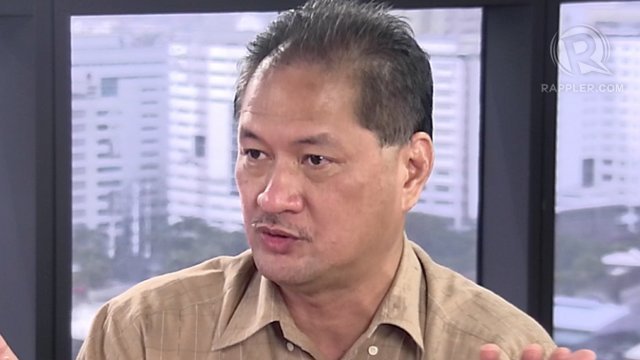
Professor Antonio La Viña: Secondary evidence is justified by Rule 130 of the Rules of Court Legal lesson 3: Secondary evidence is justified by Rule 130 of the Rules of Court Sec. 5   "When the original document has been lost or destroyed, or cannot be produced in court, the offeror, upon proof of its execution or existence and the cause of its unavailability without bad faith on his part, may prove its contents by a copy, or by a recital of its contents in some authentic document, or by the testimony of witnesses in the order stated." Professor Tony La…

Continue Reading Rule 130 Justifies Secondary Evidence (Rules of Court)

Prof. Gatmaytan writes for Zeitschrift für Politikwissenschaft

Prof. Gatmaytan writes for Zeitschrift für Politikwissenschaft In an article "Duterte, judicial deference, and democratic decay in the Philippines", published by Zeitschrift für Politikwissenschaft - Journal of Political Science, Professor Dante Gatmaytan traces “democratic decay in the Philippines.”  Through a string of decisions of the Supreme Court operating under the 1987 Constitution. the Constitutional Law scholar and teacher illustrates how the Supreme Court has refused to exercise its constitutional role of judicial review of the Executive’s actions introducing an “imbalance in the separation of powers.” Professor Gatmaytan concludes that “By judicial inaction, the Executive... becomes unfettered by any constitutional constrictions.”…

Continue Reading Prof. Gatmaytan writes for Zeitschrift für Politikwissenschaft

Effect of Voiding Amnesty on the Rule of Law

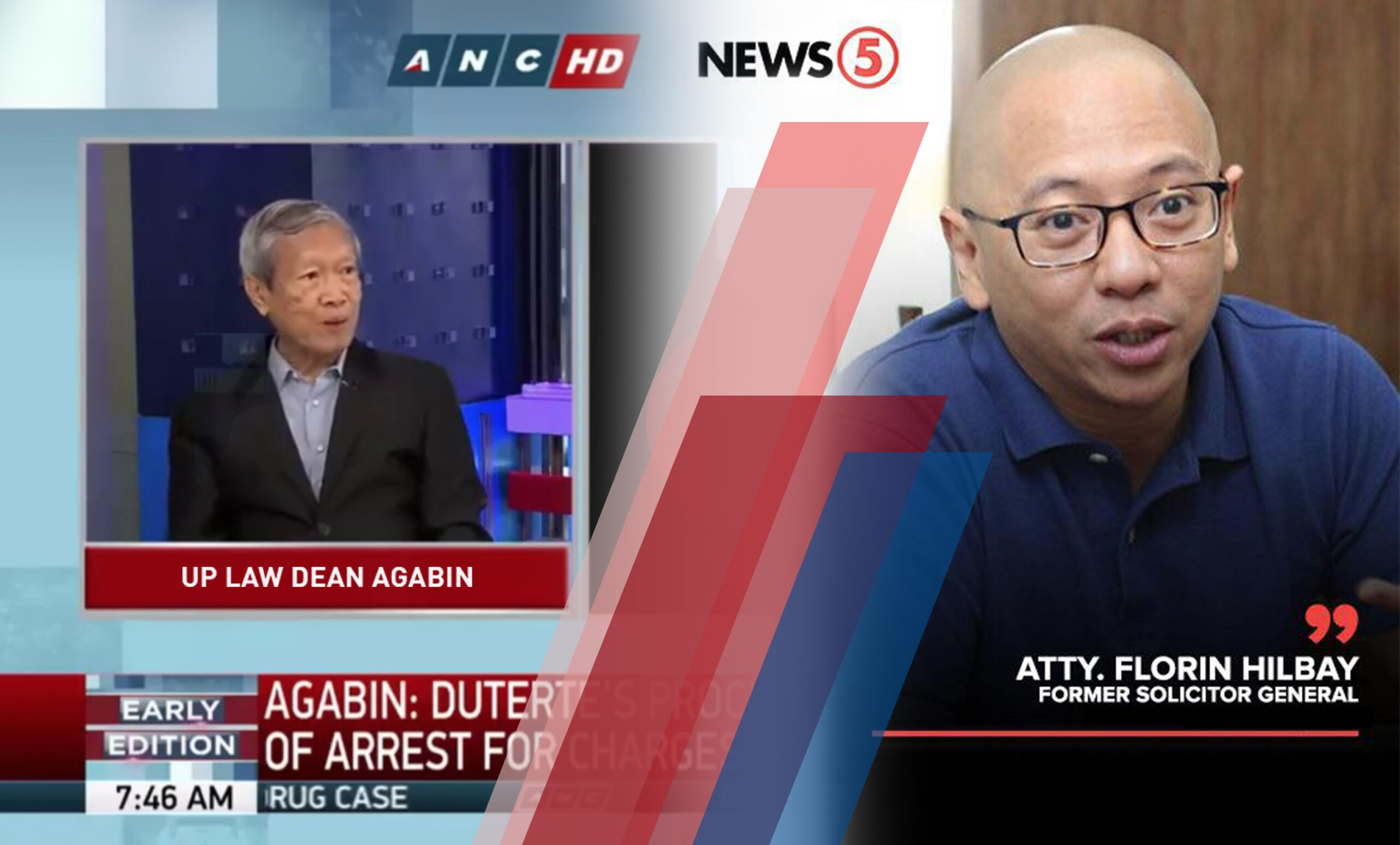
Dean Agabin, Prof. Hilbay: Effect of voiding amnesty on the rule of law Legal lesson 2: Effect of voiding amnesty on the  rule of law and teaching of the Constitution Heavyweights in  Constitutional Law, Dean Pacifico Agabin and Professor Florin Hilbay, express alarm with the reasoning of a Makati Trial Court judge in upholding Presidential Proclamation 572. The proclamation voids an amnesty granted seven years ago to Senator Antonio Trillanes. In an in-depth interview on ANC’s Early Edition program, Dr. Agabin explains in clear terms the object of amnesty, the principle of res judicata, the need to “first thresh out” if the proclamation was…

Continue Reading Effect of Voiding Amnesty on the Rule of Law

UP Law Teachers weigh in on Proclamation No. 572

UP Law Teachers weigh in on Proclamation No. 572 Lessons in the Law UP Law Teachers weigh in on Proclamation No. 572 revoking the amnesty granted to Senator Trillanes in 2011,  for his part in the Oakwood Mutiny during the Macapagal-Arroyo governance (2001-2010). Professors Jay Batongbacal, Antonio La Viña, and Susan Villanueva posted the following legal commentary and arguments slamming the Proclamation. Professor Jay Batongbacal: “This is wrong. Even assuming, for the sake of argument, that the amnesty granted to Trillanes was void ab initio, he repeatedly ran for public office and has been a sitting Senator for several terms since 2010. Running for public office is an…

Continue Reading UP Law Teachers weigh in on Proclamation No. 572

Dean Pacifico Agabin: Trillanes’ amnesty nullification infringes on fundamental freedoms

Dean Pacifico Agabin: Trillanes' amnesty nullification infringes on fundamental freedoms “As stated by our Supreme Court, if a government authority acts with an evil eye or an uneven hand, it violates the equal protection clause because the equal protection clause is also a protection against oppression and arbitrary actions—whether you are president, solicitor general, or a mere soldier” In an interview citing the above quote on ANC’s Headstart program, eminent legal scholar, teacher, and practitioner Dean Pacifico Agabin provided his considered views on the Trillanes amnesty case.  Proclamation 572 voiding Present Aquino’s grant of amnesty to Senator Trillanes is presumed unconstitutional…

Continue Reading Dean Pacifico Agabin: Trillanes’ amnesty nullification infringes on fundamental freedoms

Prof. Hilbay: Government’s amnesty process on the line

Prof. Hilbay: Government’s amnesty process on the line “The president has… placed on the line the integrity of the entire amnesty system of the government,” contends Professor Florin Hilbay referring to the Trillanes amnesty case.  As reported in the Philippine Star of 11 September 2018, he expressed concern that “If they [rebels] know the president can now exercise the power to cancel or revoke an amnesty already granted, it is really pointless to go into peace negotiations.”   The  fuller report may be accessed at: https://www.philstar.com/headlines/2018/09/11/1850588/trillanes-amnesty-case-impacts-governments-peace-process-hilbay-says  

Continue Reading Prof. Hilbay: Government’s amnesty process on the line

End of content

No more pages to load