
On 23 February 2026, the UP Gender Law and Policy Program (UP GLPP) participated as a resource institution in the Senate Committee Hearing on the proposed Right to Care Bill, presided over by Senator Risa Hontiveros. The hearing convened national government agencies, civil society organizations, legal practitioners, healthcare professionals, and sectoral representatives to deliberate on a legislative framework recognizing the designation of a healthcare agent.
In her opening statement, Senator Hontiveros emphasized that care is most ethical when it is grounded in respect for a person’s wishes—ideally expressed in advance. She noted that local government units such as Pasig, Baguio, and Iloilo have begun exploring their own versions of recognition mechanisms, signaling both the demand for and the timeliness of national legislation.
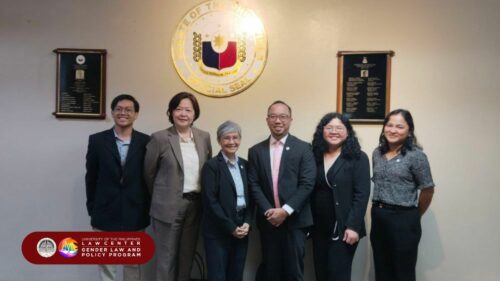
UP GLPP representatives at the Senate (From left to right, Research Assistant Jassim Mojica, Atty. Virginia Viray, Prof. Leo Battad, Dr. Lee Yarcia, Atty. Aubrey Mejia, and Atty. Irene Pua)
The proposed measure seeks to formally recognize an individual’s right to appoint a healthcare agent who may make medical decisions on their behalf in cases of incapacity.
The hearing formally opened with a presentation from a representative of the Quezon City LGU, the first local government to issue a Right to Care Card Ordinance. After sharing anecdotes of same-sex couples benefitting from the ordinance, representatives from various sectors shared lived experiences demonstrating the need for the proposed measure in response to evolving family structures and circumstances, such as circumstances where traditional next-of-kin arrangements may not adequately reflect a person’s wishes.
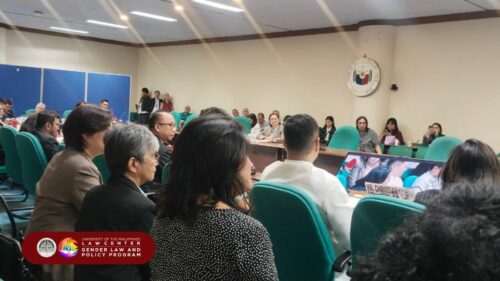
Prof. Viray, Prof. Battad, Dr. Yarcia, and Atty. Pua of UP GLPP listens to the discussion
On this point, Senator Risa Hontiveros sought the views of legal professionals on the legal safeguards of the proposed measure. UP GLPP, through Prof. Leo Battad and Dr. Lee Edson Yarcia, addressed key safeguards within the bill. Discussions focused on defining incapacity, clarifying the scope and limitations of a healthcare agent’s authority, ensuring that actions must be taken in accordance with the known wishes and best interests of the principal, and providing clear standards to guide the Implementing Rules and Regulations (IRR). The need to harmonize the measure with the Data Privacy Act, guardianship rules, and existing medical ethics standards was likewise emphasized.
UP GLPP underscored that the bill is anchored on the principle of autonomy. In so doing, the Program highlighted the importance of recognizing individuals not only within family structures, but as rights-bearing persons capable of deciding in advance who may represent them in healthcare settings.
The Program further emphasized the importance of ensuring that the measure is firmly grounded in supported decision-making rather than purely substituted decision-making. In its intervention, UP GLPP noted that the proposed bill complements existing legal frameworks—particularly the Mental Health Act’s provisions on informed consent and legal representation—by expanding the recognition of healthcare decision-making beyond the mental health context.

Prof. Leo Battad, program director, speaks on behalf of GLPP regarding safeguards in the proposed bill
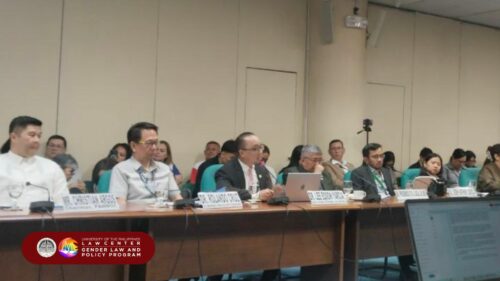
Dr. Lee Yarcia of GLPP speaks on the proposed bill’s complementarity with the Mental Health Act
Healthcare and insurance stakeholders, including representatives from PhilHealth, HMOs, and medical associations, raised operational considerations such as accountability, access to health information, and the integration of healthcare proxy designation into existing systems. Government agencies, including the Department of Health (DOH), Department of Social Welfare and Development (DSWD), and the Commission on Human Rights (CHR), expressed support for the bill, while offering recommendations to strengthen protections and promote public awareness.
Before closing the hearing, Senator Hontiveros invited civil society organizations to share their opinions on public readiness for the proposed measure. The organizations emphasized that Filipino families are increasingly diverse and geographically dispersed, and that proactive healthcare planning should be normalized. Participants proposed integrating healthcare agent designation into Universal Health Care campaigns and public information programs, ensuring that both principals and designated agents fully understand their roles and responsibilities.
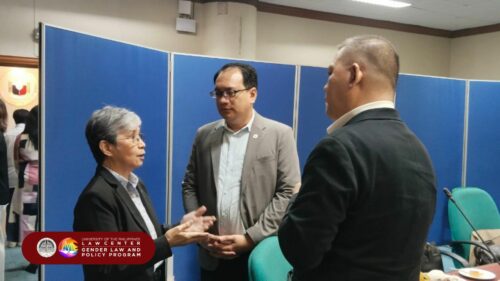
Prof. Leo Battad in further discussion with officers of Government Agencies regarding the subject bill
In closing, Senator Hontiveros affirmed that the Committee would carefully consider the insights and recommendations shared by stakeholders in refining the bill.
Through its participation in the hearing, UP GLPP reaffirmed its commitment to advancing gender-responsive, inclusive, and rights-based health governance. The Program continues to support legislative efforts that strengthen personal autonomy, recognize diverse family and care arrangements, and promote equitable access to healthcare decision-making mechanisms.
















































































 on the upper right corner to select a video.