
𝐉𝐮𝐫𝐢𝐝𝐢𝐟𝐢𝐜𝐚𝐭𝐢𝐨𝐧 𝐨𝐟 𝐄𝐃𝐒𝐀: 𝐂𝐨𝐧𝐬𝐭𝐢𝐭𝐮𝐭𝐢𝐨𝐧𝐚𝐥 𝐒𝐜𝐫𝐢𝐩𝐭𝐮𝐫𝐞 𝐨𝐫 𝐚 𝐅𝐫𝐨𝐳𝐞𝐧 𝐋𝐞𝐠𝐚𝐥 𝐌𝐲𝐭𝐡?
Legal Reflections from EDSA in Judge Raul C. Pangalangan’s New Book
By Cathryne Enriquez and Hillary Go
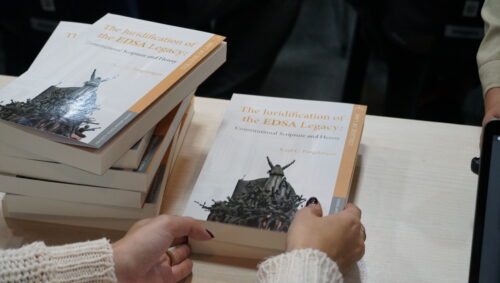
Legal luminaries, scholars, and students of the law gathered at Bocobo Hall on 13 January 2026, for the anticipated book launch of 𝑻𝒉𝒆 𝑱𝒖𝒓𝒊𝒅𝒊𝒇𝒊𝒄𝒂𝒕𝒊𝒐𝒏 𝒐𝒇 𝒕𝒉𝒆 𝑬𝑫𝑺𝑨 𝑳𝒆𝒈𝒂𝒄𝒚: 𝑪𝒐𝒏𝒔𝒕𝒊𝒕𝒖𝒕𝒊𝒐𝒏𝒂𝒍 𝑺𝒄𝒓𝒊𝒑𝒕𝒖𝒓𝒆 𝒂𝒏𝒅 𝑯𝒆𝒓𝒆𝒔𝒚, written by former UP Law Dean and former International Criminal Court Judge Raul C. Pangalangan. The book examines the constitutional legacy of the EDSA People Power Revolution forty years after the historic uprising and explores questions about its legacy in Philippine law and jurisprudence.
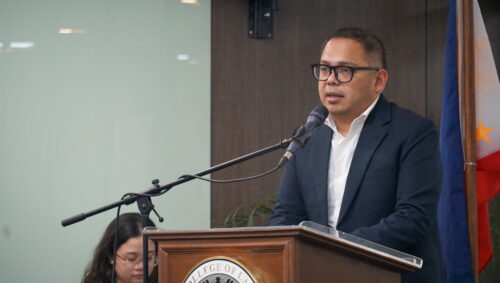
Associate Dean Paolo S. Tamase gave the opening remarks on behalf of Dean Gwen Grecia-De Vera, emphasizing the value of examining the impact of EDSA and confronting the critical questions that legal scholarship has traditionally avoided.
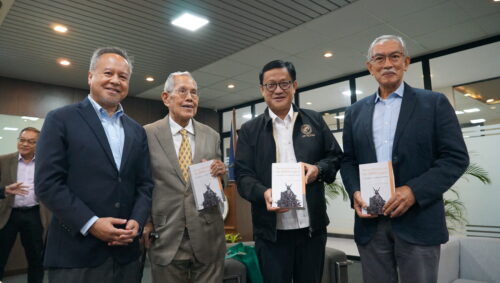
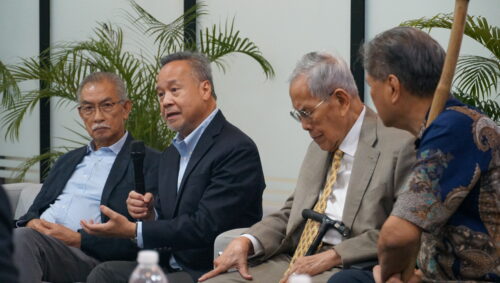
Guests, who shared their unique perspectives to Judge Pangalangan’s analysis of EDSA’s constitutional legacy, included Supreme Court Associate Justice Vicente V. Mendoza (Ret.), Professor Emeritus of Sociology Randy David, and UP President Angelo Jimenez.


𝐏𝐞𝐫𝐬𝐩𝐞𝐜𝐭𝐢𝐯𝐞𝐬 𝐟𝐫𝐨𝐦 𝐭𝐡𝐞 𝐅𝐫𝐨𝐧𝐭𝐥𝐢𝐧𝐞𝐬 𝐨𝐟 𝐄𝐃𝐒𝐀
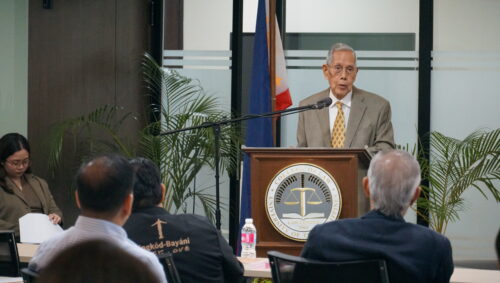
Retired Associate Justice Mendoza shared his observations on the legal and political dynamics of People Power, calling the EDSA Revolution as a “strange alchemy.” He was part of the high court during EDSA II and was an Assistant Solicitor General in the events leading to EDSA I.
“The book is an account of what happened 40 years ago, when the heritage and heresy was brought together in a strange alchemy and produced what later scientists called people power. It was a new thing. A new phenomenon never before experienced,” he said.
Describing the role of EDSA in our current constitutional setting, Justice Mendoza further noted that “the law expanded its role to many areas of political and economic life […] if we speak of them as the consequences of the expansion of law to these areas, that is what I think is the juridification of the legacies of EDSA.”
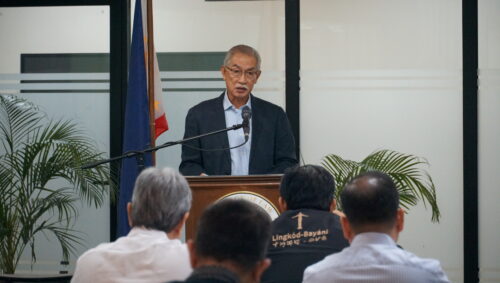
Meanwhile, renowned journalist and sociologist Randy David, who himself participated in the anti-dictatorship movement at the height of Martial Law, described the events of EDSA as “a template for a peaceful return to democracy” but offered a more cautionary reading of EDSA’s legal codification.
“The hope was that EDSA’s ideals could be applied mechanically without much ideological contestation, as democracy could run on procedure alone. However, as [Judge Pangalangan described] it, such hope is a false one. There is no avoiding the ideological fight,” he noted, drawing from the book’s own reflections.
Professor David argued that the burden eventually fell on law and the Supreme Court, revealing the Court’s and our political system’s own fragility. “Again and again, we have turned to the Supreme Court not just as an interpreter of the Constitution but as the guardian, stabilizer, and ultimate arbiter. That is too much of a burden for any society to carry.”
Finally, UP President Angelo Jimenez commended the UP Law Complex for publishing a book from a “maverick,” the term he used to describe Judge Pangalangan, who had always challenged comfortable assumptions and expanded the possibilities of human ideas.
𝐍𝐨𝐫𝐦𝐚𝐭𝐢𝐯𝐞 𝐃𝐢𝐬𝐬𝐨𝐧𝐚𝐧𝐜𝐞
In response, Judge Pangalangan highlighted the Supreme Court’s judicial flip-flopping in cases tackling the limits of presidential power and succession from one chief of state to the next that occurred during EDSA I and II. He called such lack of “coherent ideological framework flowing from Javellana to Lawyers League” as a “normative dissonance,” which he emphasized through cases decided in the aftermath of EDSA II.
Citing an article in his book, “Anointing Power with Piety,” Judge Pangalangan noted the Supreme Court’s “persistent dilemma between popular democracy and the rule of law.” In the PIRMA cases, which dealt with petitions to amend the 1987 Constitution through people’s initiative, he noted that the high court described itself as the “last bulwark of democracy” while still acknowledging the political reality that “maybe the Constitution was being manipulated to perpetrate some people in power.”
“There is a gap, then, between the political reality that the Court deals with versus the juridified reasoning that the Court spells out in its decisions [..] The gap between the fact and the norm, the gap between the visceral and the intellectual is not a purely academic fact,” he stressed.
𝐄𝐃𝐒𝐀 𝐚𝐬 𝐚 𝐋𝐢𝐯𝐢𝐧𝐠 𝐋𝐞𝐠𝐚𝐜𝐲
EDSA’s juridification produced legal and constitutional changes, including limitations on presidential power, expanded judicial review, and recognition of rights. Despite this, the same process reveals the fragilities in our legal institutions, particularly the burden on the judiciary to act as a moral arbiter, a political system that avoids ideological debate, and the doctrines applied consistently or inconsistently depending on the “political season.” Judge Pangalangan’s book challenges the UP Law community and the legal profession to confront contradictions with a critical mindset.
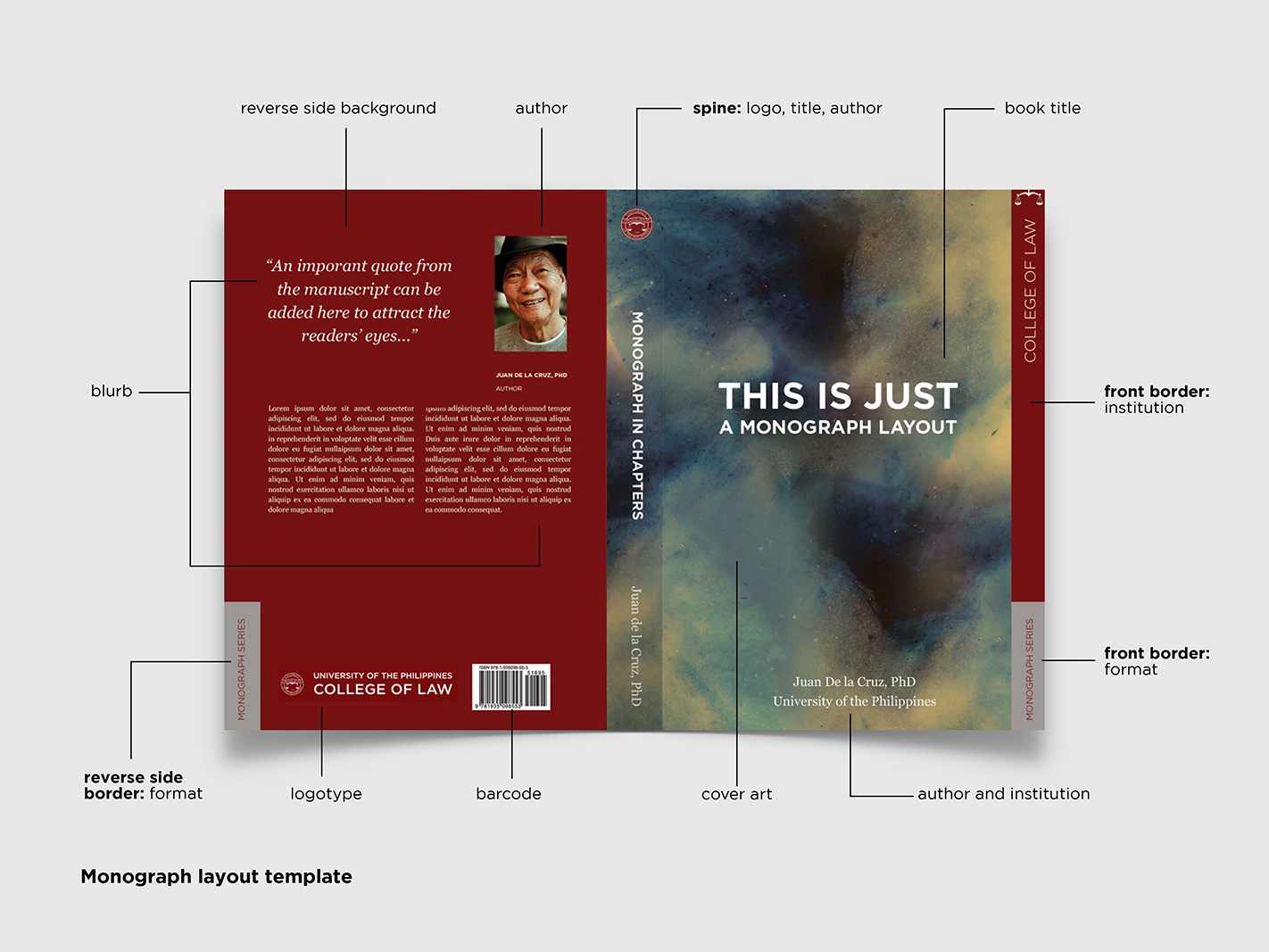
The book was edited by the Information and Publication Division of the UP Law Complex and is part of its Faculty Scholarship Series.









































































 on the upper right corner to select a video.